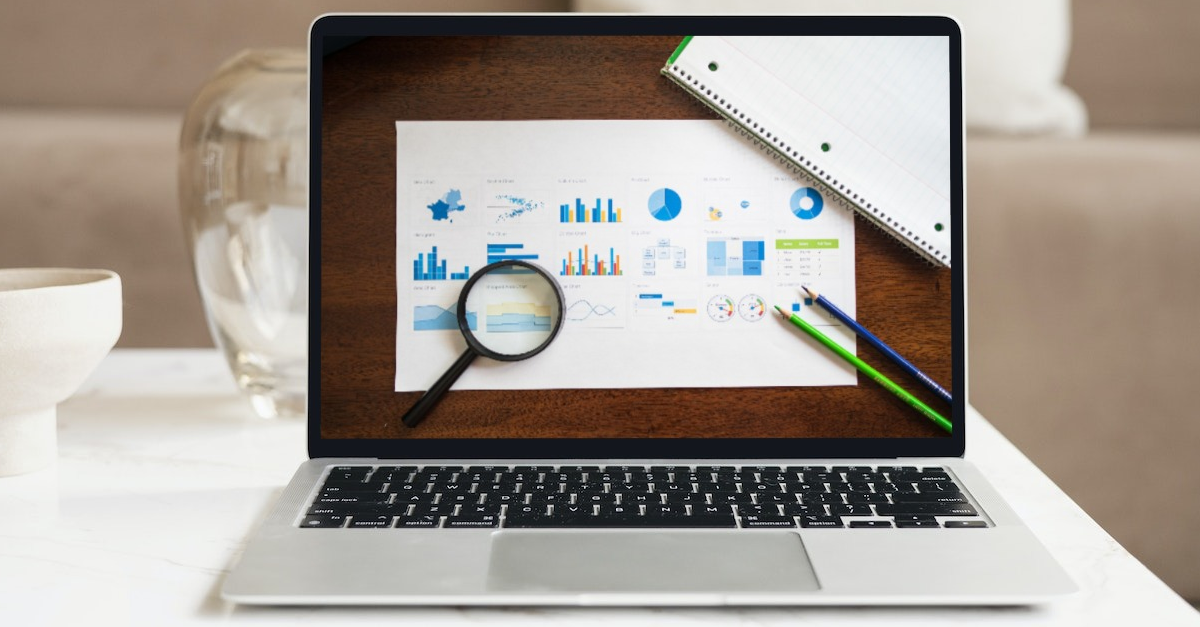
Data has become an integral part of daily work activities. Every department is collecting it. The Sales department is monitoring the leads. The Operations department is following the tasks. The Finance department is checking the expenses. The issue is not the quantity of data, but rather the fact that data is often scattered in too many places. Different sources, such as spreadsheets, reports, emails, and software tools, provide partial views but hardly ever the full picture.
This is where a smart data dashboard steps in to be of help. A smart data dashboard at once brings significant information into one clear view. It changes numbers into graphs and summaries that can be quickly understood by people. Rather than making assumptions or waiting for reports, teams can monitor what is happening at that moment.
Such organizations that are expanding, particularly those that deal with complex processes like title and settlement work, will find this kind of clarity as one of their main advantages. We have listed below five main reasons why it is beneficial for your organization to use a smart data dashboard and how it can ultimately change the way people work daily.
1. Everyone Sees the Same Information
Confusion is a frequent problem in organizations. Different departments rely on different reports. In some cases, figures do not correspond at all. Rather than discussing possible actions, the argument becomes who has the right data and who has the wrong one.
The smart data dashboard gives a solution to this by identifying one source of truth with all the data being looked at by everyone and updated in real-time. A manager’s checking of performance and a team member’s checking of progress are the same in terms of numbers.
The trust factor increases with this common viewpoint. It also brings about a reduction in the amount of time spent. No one has to go back and forth anymore with figures or ask for the latest reports. The speed of decision-making is increased as a result of the situation becoming clearer.
2. Problems Are Spotted Early
Small issues often turn into big problems when they go unnoticed. A missed deadline, a backlog forming, or a drop in quality can be easy to miss when data is buried in spreadsheets.
A smart data dashboard makes problems visible early. Clear charts and alerts show when something moves outside the normal range. If order volume spikes or turnaround time slows, teams can see it right away.
Early visibility means early action. Instead of reacting after customers complain, managers can step in before service is affected. This is especially important in industries where timing and accuracy matter.
The National Institute of Standards and Technology has shown that early detection of process issues can reduce operational costs and errors. Seeing problems early protects both reputation and revenue.
3. Better Decisions With Less Guesswork
Good decisions are highly reliant on good information. In the absence of unambiguous data, individuals resort to instinct or routine. This method might work sometimes, but it frequently results in errors.
A clever data dashboard encourages better decision-making by revealing trends and patterns. Groups can measure today’s performance against last week’s or last month’s. Managers can identify the processes that are performing well and the ones that need to be improved.
This does not require advanced technical skills. A well-designed dashboard uses simple visuals. Bar charts, line graphs, and clear labels make the data easy to understand. Even someone without a data background can learn from it. When decisions are based on facts, results improve over time.
4. Saves Time for Every Team
Many teams spend hours each week preparing reports. Someone pulls data from one system. Someone else checks it. Then the report is shared by email. By the time people read it, the data may already be old.
A smart data dashboard reduces this workload. Data updates automatically. Reports are always current. People no longer need to build the same reports again and again.
This time savings adds up. Managers get more time to coach their teams. Staff get more time to focus on meaningful work instead of paperwork.
According to the U.S. Census Bureau, clear data presentation helps people understand complex information more easily.
5. Encourages Accountability and Ownership
Performance visibility attracts people’s attention. A smart data dashboard displays progress in an easy way. The team is allowed to know the significance of their work in the context of the overall goals.
This clarity promotes responsibility taking. The teams can be proud of themselves if they can prove their achievement of the set goals through the data shown by the dashboard. In case of underperformance, the problem area is pointed out and defined. One can move from assigning blame to seeking progress and improvement.
Besides, the leaders can use the dashboards to set goals that are realistic. The goals can be drawn from the actual data rather than being vague targets. This results in everyone involved knowing their position and being treated fairly. When people are aware of their evaluation criteria, they work with better focus and confidence.
Why a Smart Data Dashboard Matters Now
Today, organizations move fast. Customers expect quick answers. Teams are asked to do more work with fewer people and less time. In this kind of environment, clear information is no longer a bonus. It is a necessity.
When data is spread across reports, emails, and different tools, work slows down. People spend time searching for numbers instead of solving problems. Mistakes happen when teams use different versions of the same data.
A smart data dashboard helps bring order to daily work. It shows important information in one place and makes it easy to understand. Teams can communicate better, make faster decisions, and stay focused on what matters.
A dashboard does not replace people or their experience. Instead, it supports them by making information clear and easy to act on. When data is simple, teams can use their judgment and skills more effectively.
For organizations that manage complex tasks, strict rules, and tight deadlines, having the right data at the right time makes a real difference. It helps teams stay on track and avoid problems before they grow.
Conclusion
A smart data dashboard is not just a reporting tool. It is a practical way to help people work better every day. When everyone sees the same clear information, problems are noticed earlier, decisions improve, time is saved, and responsibility becomes clearer.
The real value is not in the charts themselves. It is in how teams use that information to improve daily work. When data is easy to see and understand, it becomes useful.
If your organization is ready to move away from scattered reports and unclear numbers, it may be time for a smarter approach.
Title Leader’s Smart Dashboard helps bring all your data into one clear view, so teams can focus on action instead of confusion.
Clear data leads to better work. The first step is seeing everything in one place.